For the correct and harmonious development of the child, it is necessary to build the educational process on a number of techniques. For example, constructing in an older group of paper is a compulsory activity that contributes to the development of artistic skills.
Goals, objectives, process features
Paper is a special material because it can be crushed, twisted, torn, cut, bent. All these activities seem simple, but for a child they are quite complicated. In pedagogical practice, this technique has been used actively for many years. Probably, many have heard about such Japanese technology as origami, when through the creation of paper crafts a person reflects the world around him and expresses his attitude to it. Another popular Kirigami technique is the process of folding and cutting paper in various directions.
The design in the older group of paper is to create certain sculptures, combining various forms of material, and all this is done by children. During these processes, the following goals are achieved:
- development of spatial representation;
- ability to understand the techniques of work and demonstrate their knowledge;
- improvement of reproductive activity (that is, the creation of crafts on the model proposed by the educator);
- installation on the development of their own creative nature.
Where to start training?
Designing paper for children is a process that you should start by familiarizing yourself with the properties of the material. We need to tell the guys that paper is soft or hard, smooth or rough, of any color. With it you can perform various procedures: tear, crush, cut, and so on. For example, in a lesson, you can give out paper to children, which will differ in thickness, color, texture. You can offer them to crush or tear it, determine the sounds made at the same time, the changes that occur with paper, and so on.
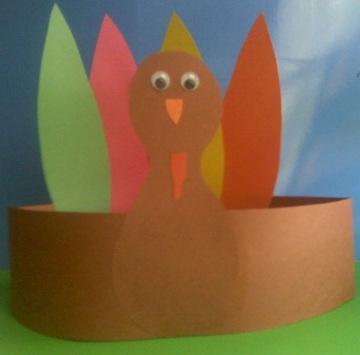
Carrying out the construction in the senior group of paper, you can create whole crafts and compositions with the children. Moreover, from lesson to lesson, it is necessary to complicate the tasks and diversify them as much as possible. This will gradually develop the skills of independent creative design. It is very important to interest children, for example, to create crafts for theatrical performances on a specific topic or to compose compositions from products made by different children.
As the studies of teachers show, designing in the senior group of paper allows you to achieve excellent results. Firstly, children learn to embody their fantasies on paper. Secondly, solving a clearly defined problem, they are forced to look for some unusual solutions, and for this you have to use different techniques, choose a material that differs in texture or color. Any creative process provides an opportunity to encourage the child to act and invent, and this is the guarantee that he will form a certain vision of the world.
The lesson plan "Circus Clown". Construction from paper (senior group)
Objectives:
- Continue exploring techniques such as creasing and tearing paper.
- show that they can be used both for creating parts and for a complete product;
- to form the ability to correlate colors and sizes depending on the purpose of the craft.
Lesson preparation
Prepare paper for each child : tissue paper, tissue paper , toilet paper, corrugated paper of different colors and sizes, as well as a clown figure made of cardboard (about 50 cm high), a basket (height 15 cm).
Class progress
To the music of V. Shainsky “Circus” a clown figure appears. The teacher asks the children who they are, what they do, where they can meet him. The following is a puzzle game on the subject of clown clothes. Then the teacher offers to create clothes for the clown with his own hands from paper using different techniques. If children find it difficult to complete the task, you can help them. So in a playful way they learn that details are important for creating a holistic image, and you can make them yourself.