The Portsmouth Peace is an agreement between the Russian Empire and Japan on the cessation of hostilities. It was this treaty that put an end to the senseless and destructive Russo-Japanese war, which lasted from 1904 to 1905. This momentous event happened on August 23, 1905 in Portsmouth, an American town, with the mediation of the US government. The contract was signed by both parties. Because of it, Russia lost the right to rent the Liaodong Peninsula and terminated the union agreement with China, which provided for a military alliance between these states against Japan.
Reasons for the start of the Russo-Japanese War
Japan was a closed country for a long time, but in the second half of the 19th century it began to liberate itself unexpectedly, opened up to foreigners, and its subjects began to actively visit European states. Progress was clearly visible. By the beginning of the twentieth century, Japan had created a powerful fleet and army - this was helped by foreign experience, which the Japanese adopted in Europe.
The island state needed to expand the territory, which is why it launched a military aggression aimed at nearby countries. China became the first victim of Japan: the aggressor managed to capture several islands, but this was clearly not enough. The state has laid eyes on the lands of Manchuria and Korea. Of course, the Russian Empire could not tolerate such impudence, because the country had its own plans for these territories, rebuilding railways in Korea. In 1903, Japan and Russia held repeated negotiations, hoping to resolve the conflict peacefully, but in vain. Having never agreed on a division of the land, the Japanese side unexpectedly unleashed a war by attacking the empire.
The role of England and the USA in the war
In fact, Japan decided not to attack Russia on its own. The United States and England pushed her to this, because it was they who provided financial support to the country. If it were not for the complicity of these states, then Japan would not have succeeded in breaking up tsarist Russia, because at that time it did not represent an independent force. Portsmouth’s world might not have been made if it hadn’t been for the sponsors ’decision to go with military action.
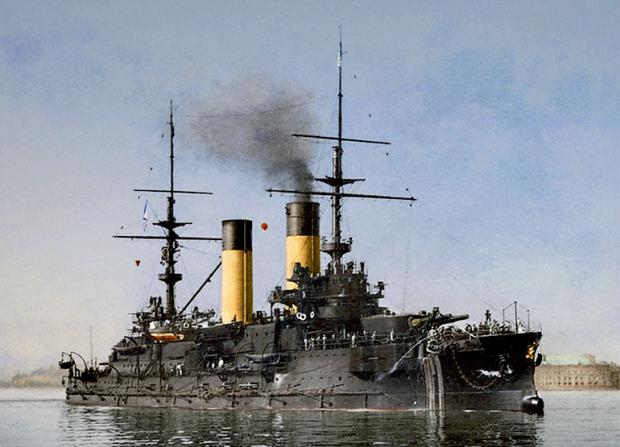
After Tsushima, England realized that Japan had strengthened even too well, and therefore significantly reduced the cost of the war. The United States strongly supported the aggressor, and even forbade France and Germany to defend the Russian Empire, threatening reprisals. President Theodore Roosevelt had his own cunning plan - to drain long-term military action on both sides of the conflict. But he did not plan to unexpectedly strengthen Japan and defeat the Russians. The conclusion of the Portsmouth Peace would hardly have taken place without the mediation of America. Roosevelt worked hard to reconcile the two militants.
Unsuccessful attempts to make peace
Having lost the financial support of the USA and England, Japan has noticeably weakened economically. Despite significant military achievements in the war with Russia, the country, under pressure from former sponsors, began to lean toward peace. Japan made several attempts to reconcile with the enemy. For the first time, the Japanese spoke of reconciliation in 1904, when in Great Britain the Russians were asked to conclude an agreement. Negotiations did not take place: Japan demanded that the Russian Empire recognize that it was the initiator of the cessation of hostilities.
In 1905, France acted as an intermediary between the warring countries. The war affected the interests of many European states, so they wanted its end soon. France at that time was not in the best situation, the crisis was brewing, so she offered her help to Japan and took over the mediation of peace. This time, the aggressor demanded that the Russian Empire pay a surrender indemnity, but Russian diplomats flatly refused such conditions.
US Mediation
After the Japanese demanded that Russia repurchase in the amount of 1,200 million yen and in addition to the island of Sakhalin, the American government unexpectedly sided with the empire. Roosevelt threatened Japan with the deprivation of all support. Perhaps the terms of the Portsmouth Peace would be different if not for US intervention. The American president, on the one hand, tried to influence the Russian Empire by unobtrusively giving advice to the tsar, and on the other hand, pressured the Japanese, forcing him to think about the deplorable state of the country's economy.
Japan's peace conditions
The aggressor wanted to get the most out of the war. That is why Japan wanted to maintain its influence in Korea and southern Manchuria, take away the entire island of Sakhalin and receive a repurchase of 1,200 million yen. Of course, such conditions were unprofitable for the Russian Empire, so the signing of the Portsmouth Peace was postponed indefinitely. Witte, the representative of Russia, flatly refused to pay indemnities and concessions to Sakhalin.
Concessions of Japan
As Ishii later admitted in his memoirs, their country dealt with Russia, which never paid anyone anything. The firmness of Russian diplomacy and the loss of sponsor support have perplexed the Japanese. Portsmouth was on the verge of collapse, the Japanese government gathered at a meeting that lasted a whole day. They decided whether to continue the war for Sakhalin. On August 27, 1905, it was decided to abandon the island and not demand indemnity. The state was so exhausted that it was not possible to continue hostilities.
Oversight of Russia
Meanwhile, the US president sent a telephone message to the Russian Tsar, in which he advised to give the island of Sakhalin. The Russian Empire wanted peace, because the government needed to suppress the impending revolution. However, the king agreed to cede only the southern part of the island. The Portsmouth Peace could be signed on other conditions, because the Japanese have already decided to abandon the encroachments on Sakhalin. August 27, immediately after the meeting, it became known about the decision of the king. The Japanese government, of course, did not miss the chance to take control of the new territory. True, the Japanese took risks, because if the information was not correct, then the world would not be concluded again. In case of failure, the official who handed it over would have to make hara-kiri.
In the end, the Portsmouth Peace was signed on September 5, 1905. The ambassador of Russia yielded to the demands of Japan, as the tsar ordered him. As a result, the Tokyo government gained a sphere of influence in Korea, received rental rights to the Liaodong Peninsula, the South Manchurian Railway, as well as southern Sakhalin. True, Japan did not have the right to engage in fortification on the island.
What did Portsmouth Peace bring to both sides of the conflict?
The date of signing the peace treaty was to be the last point in the conflict and the start for raising the economy from ruins. Unfortunately, neither Russia nor Japan benefited from the Russo-Japanese war. All this was a waste of time and money. The Japanese perceived the signing of the peace treaty as a personal insult, humiliation, moreover, the country was actually ruined. The revolution was brewing in the Russian Empire, and losing the war was the last straw of popular anger. At the beginning of the twentieth century for both states, not the best of times came. A revolution has begun in Russia ...